



Canada’s Power Challenge: The Next Defining Issue for Data Centers

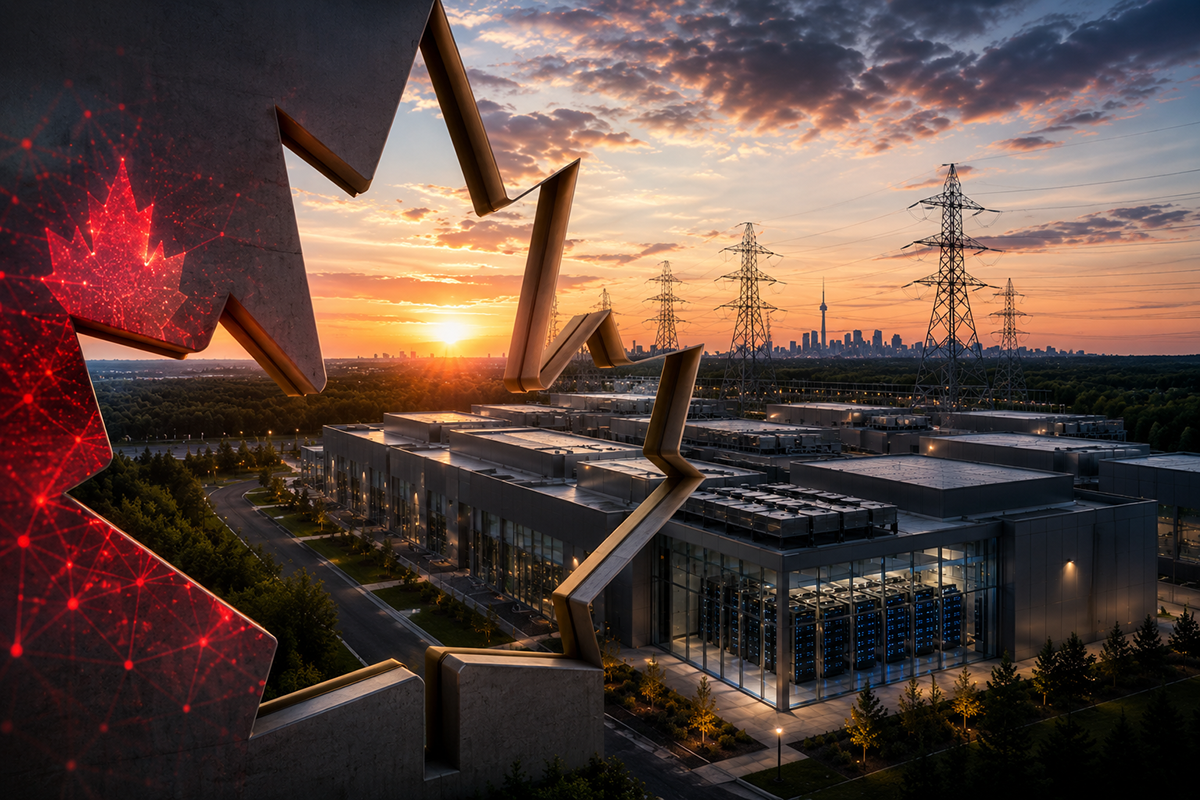
The Canadian data center industry continues to expand as demand for cloud services, digital infrastructure, and mission-critical environments grows across all sectors. While the industry has spent years focused on growth and capacity expansion, a new challenge is beginning to shape the future of development across North America: power availability. Utilities are struggling to keep pace with rising electrical demand, forcing developers, operators, and governments to rethink how facilities are planned and powered. In many major markets, securing reliable energy has become more important than land availability or connectivity. This edition of CRSC Connections explores how energy constraints are reshaping data center development and why power planning is quickly becoming one of the industry’s highest priorities.
Power Availability Is Becoming the Largest Barrier to Growth
Across Canada and other major markets, demand for new data center capacity remains extremely strong. However, utilities are facing increasing pressure as large-scale developments require significantly more electrical infrastructure than ever before. Many hyperscale campuses now require hundreds of megawatts of power, straining substations, transmission systems, and regional grids. In several markets, utility interconnection timelines are extending by years due to infrastructure constraints and growing demand from other industries. As a result, power availability is becoming one of the biggest factors influencing whether projects move forward on schedule.
Developers are now engaging utilities much earlier in the planning process to secure long-term electrical capacity. Investments in substations, switchgear, backup generation, and redundant distribution systems are increasing across the industry. Operators are also prioritizing scalability and resiliency as facilities grow larger and more complex. Organizations that secure reliable power early are gaining a major competitive advantage within the market. The industry is quickly learning that energy certainty is now essential to successful project execution.
Canada Continues to Attract Data Center Investment
Canada remains an attractive location for data center growth due to its stable business environment and access to lower-carbon energy sources. Provinces such as Quebec, British Columbia, and Manitoba continue to attract investment due to their hydroelectric infrastructure and renewable energy capacity. Alberta is also emerging as a competitive market due to flexible energy infrastructure and faster development timelines. Ontario remains the country’s largest data center market, although several regions are beginning to experience increased pressure on electrical capacity as demand accelerates. These regional differences are reshaping how operators evaluate future expansion opportunities nationwide.
Governments and utility providers are also recognizing the growing importance of digital infrastructure to Canada’s economy. Data centers are increasingly viewed as critical infrastructure that supports financial systems, healthcare, communications, and cloud computing services. This shift is driving greater discussions around grid modernization and future energy development across the country. Long-term infrastructure planning is becoming increasingly important as digital demand continues to grow. Canada’s ability to balance energy availability with future expansion will play a major role in the industry’s long-term success.
Sustainability and Efficiency Remain Major Priorities
As power demand rises, sustainability expectations continue to increase across the data center sector. Customers, investors, and regulators now expect measurable improvements in energy efficiency and environmental performance. Operators are investing in advanced monitoring systems, efficient cooling technologies, and renewable energy strategies to improve operational performance while reducing environmental impact. Battery storage systems and more efficient electrical distribution strategies are also becoming increasingly common across new developments. Sustainability is no longer viewed as a secondary initiative but as a critical part of long-term operational strategy.
Facilities are also being designed with greater flexibility to support future infrastructure changes and higher power densities. Modular electrical systems and scalable facility layouts are helping organizations improve efficiency while preparing for future growth. At the same time, supply chain challenges and long lead times for critical equipment continue to place pressure on project timelines. Operators must now balance speed, reliability, and sustainability simultaneously as facilities become more technologically advanced. The organizations that succeed will be those capable of adapting to both operational and energy-related challenges.
Infrastructure and Workforce Pressures Continue to Grow
As data center projects become larger and more complex, infrastructure execution and operational staffing are becoming increasingly important across the industry. Supply chain challenges continue to affect the availability of critical equipment, including generators, transformers, switchgear, and cooling systems. Long procurement timelines are forcing developers to secure equipment much earlier in the project lifecycle to avoid delays. At the same time, skilled labour shortages across construction, electrical infrastructure, and facility operations are creating additional pressure on schedules and long-term operations. These challenges are making project coordination and planning more critical than ever before.
To improve efficiency and reduce risk, many organizations are adopting standardized and modular construction strategies across multiple facilities. Repeatable infrastructure designs help simplify deployment and improve consistency across projects. Operators are also placing greater emphasis on commissioning, preventative maintenance, and operational readiness to ensure facilities perform reliably from day one. As infrastructure becomes more sophisticated, the importance of experienced technical teams and long-term operational support continues to increase. The organizations that succeed will be those capable of balancing rapid growth with reliable execution and operational resiliency.
Looking Ahead
The Canadian data center industry is entering a period where power availability will shape nearly every major infrastructure decision. Energy constraints, sustainability expectations, and growing digital demand are changing how facilities are planned, developed, and operated across the country. Organizations can no longer focus solely on increasing capacity. They must also ensure infrastructure is resilient, scalable, and aligned with long-term energy realities. The future of the industry will depend not only on how much capacity can be built, but on how effectively that infrastructure can be powered and sustained over time.